
Highway 18 musings on behaviour and wellness for 2020
Authenticity it the daily practice of letting go of who we think we are supposed to be and embracing who we are”
Brene Brown

Authenticity it the daily practice of letting go of who we think we are supposed to be and embracing who we are”
Brene Brown
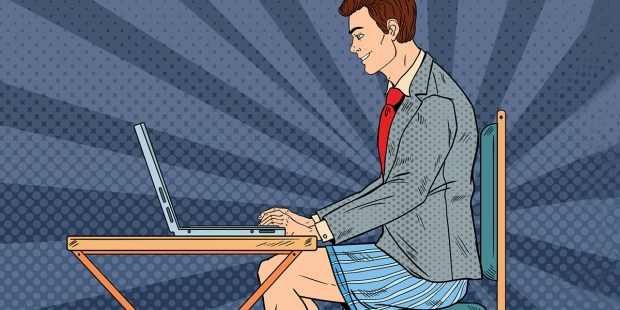
Recognizing the signs of burnout
As a result of COVID-19, many educators are experiencing physical isolation, a surge in care demands, and all the unknowns. These factors can all lead to increasing stress levels.
When stress builds up it can lead to feelings of extreme exhaustion and being overwhelmed, also known as burnout.
Here are some signs you may be experiencing burnout:
Sustaining Wellness and Preventing Burnout
Check in with yourself:
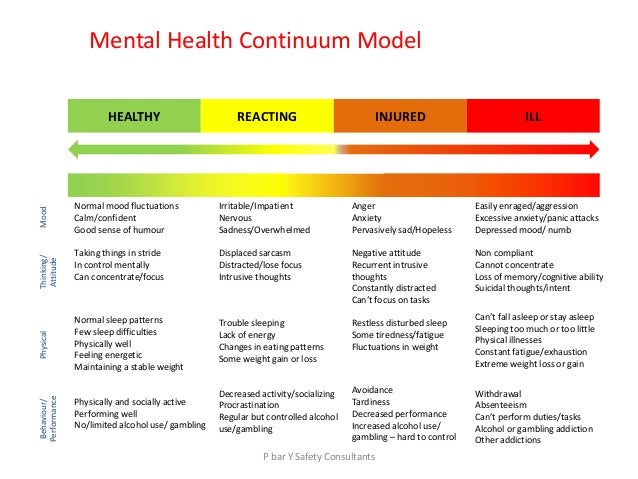
Graphic adapted from Road to Mental Readiness, Canadian Armed Forces © October 2017 Drs. Kerri Ritchie & Caroline Gérin-Lajoie, The Ottawa Hospital
Care for Yourself:
Meet your basic needs (eat, drink water, sleep)
Transition within your day- Ask yourself am I distracted? Do I need a mental break?
Breathing Exercises
Stay Connected
Find support from friends and coworkers
What about the people we are supporting?
Use the HELP acronym
Ask HOW are you?
Be EMPATHETIC and understanding
LISTEN without judgement and state your concerns
PLAN next steps: encourage formal support or ask what you can do to help.
Reach out if you need Support!
Resources:
https://www.cma.ca/maintaining-wellness-during-pandemic
MFAP and Teacher Well-being https://www.stf.sk.ca/pension-benefits/teacher-well-being
Health Line 811 is a confidential, 24-hour health and mental health and addictions advice, education and support telephone line available to the people of Saskatchewan. It is staffed by experienced and specially trained Registered Nurses, Registered Psychiatric Nurses, and Registered Social Workers. Health Line 811 is free.
The Canadian Mental Health Association, Saskatchewan Division has set up phone lines to support those who may be struggling in these changing times: Provincial Line: 306-421-1871 Provincial Youth Line: 306-730-5900
Support is also available through the Saskatchewan Health Authority Mental Health intake at 1-800-216-7689.
Our world has changed. We have heard it many times over. Our world, pre-pandemic, is not our reality anymore.
What does this mean for me?
About 100 days ago (literally) I was running two children to the end of their winter sports, planning a curling bonspiel and awaiting the return of my third from his winter living arrangements with family. We were navigating a concussion with him and the realization that not only was his hockey season over, but we weren’t sure he would be ready for baseball tryouts in early spring. I was driving daily 30 minutes each way to my office and then driving throughout Southern Saskatchewan for work. I often would return to the city in the evenings for the kids and their sports. We were dog sitting my parents Lab while they were finishing up their six week winter vacay in Mexico.
Enter- social distancing and Covid-19.
My initial response to being asked to work from home and have my children here with me was one of cautious optimism. I was raised on a farm with a Mom who is an artist and works from her studio at home and a Dad who farms. Both my grandparents were on their homesteads before that and my grandmothers were at their homes, cooking, caring for us and the family. My Grandma was gardening, knitting, making quilts, doing crossword and soduko puzzles and baking. They lived happy, creative lives in their homes.
Being home was an actual dream of mine. I love my job, I love the people I work with but the idea of being home and still being able to connect with them and work was very intriguing to me. I loved my maternity leaves, being with my children but also finding time to can foods with my mother-in-law, garden, sew sock monkeys and crafts and just generally be happy. During the pandemic I now look back recently to end of March and April and am happy to say I did yoga and meditated almost every day. My husband and I did lots of renovations and clean outs and updates to our home and I was able to save some cash not driving daily and all the expenses that entails. I created art, gardened and connected with my children on a deeper level. I became their teacher and office manager, it was a very peaceful and special time on our life. I connected with the blessings we were receiving through my job still existing and being reconnected with the artist teacher community that I had forgotten was a part of my soul.
My children worked alongside me during the day and helped out in the evenings. I finally completed some reading with my youngest that we are often too exhausted to complete when we were in the pre-corona marathon that was our life. My parents were luckily able to return and our families were all safe in their homes.
Most days I was very thankful for the gifts of this time. I understand that there are many many families who did not experience this time in the way that I did. I hope for these families that there is a way forward with love and peace and hope that as we move into the future we can continue to support all of us as we enter our new reality.
Simon Breakspear recently introduced the concept of “snap back”. He implores us to consider the pieces we have learned and what are we not willing to give up during this unprecedented time. I have many things I have learned that I am unwilling to give up. The number one thing is to slow down and to value the connection we have made with our children. I am happy to say I feel content with what I have in front of me, we are very blessed and I am unwilling to return to feelings of inadequacy and wanting.
As we move into more “phases” of reopening I think about the cyclical nature of the term phase. We cycle with the moon, we ebb and flow like tides. So how do these phases of reopening change our momentum as we move forward. Do the ever changing rules make it harder or more complex to try and do the right thing? Is it 30 or 15 people? Do I wear a mask to the chiropractor and not to Walmart? It involves a lot more cognitive energy to sort this all out. The idea of Stay home seems like it was an easier directive to follow to do the right thing.
The term that has many worried is unknown. I think in education, most of my colleagues are planners. Planning may in fact be an attempt to control outcomes and also environment. Corona is changing that. We don’t know what the fall will be like, we don’t know if the government plans will happen or not, we don’t know how to stop the virus, we don’t know who it will make ill more so than another. We are living in uncertainty. There are a few educators who work well with the unknown but that, in my opinion, is not the norm.
There is a quote out there that’s apparently from the Dalai Lama,
“There are only two days in the year that nothing can be done. One is called Yesterday and the other is called Tomorrow. Today is the right day to Love, Believe, Do and mostly Live.”
How do we authentically live in the present? Why is this important? I think when we start to get out of our heads, stop catastrophizing, overgeneralizing, magnifying, jumping to conclusions, or any of the other cognitive distortions, we can hopefully find a way to ground ourselves in the truth about our lives. We must find a way to move out of fight, flight or freeze and live in the world that we have in front of us today. How can we predict what will happen when what we have in front of us is unknowns and uncertainties? Will it help to spend exhaustive hours worrying about these unknowns that will never play out in the way you perceive it to be anyway?
So I propose that one of the main pieces of learning for us as a society is the art of balance. Yes we always want to be able to balance home, work, children, stress, exercise, self-care, all the “I should’s” (another social distortion) but this is not what I am meaning when I talk about balance.
Balance for me in this moment is about balancing the unknown and what the future holds, with what I can control and what is happening in this present moment.
I can ask the following questions in my quest for this balance and to help when distortions are in the way:
2. What is good in my life? It may sound silly to list the things that are good in your life but research has shown that our brains suffer from neural bias- we need three positive thoughts to negate a negative one as discussed by Barbara Freedman founder of Positive Psychology .
“Negative thinking is also self-perpetuating, and the more you engage in negative dialogue—at home or at work—the more difficult it becomes to stop. [6] But negative words, spoken with anger, do even more damage. They send alarm messages through the brain, interfering with the decision-making centers in the frontal lobe, and this increases a person’s propensity to act irrationally.”
https://www.psychologytoday.com/intl/blog/words-can-change-your-brain/201208/why-word-is-so-dangerous-say-or-hear
I worry about the rant, and complain that permeates culture. How do we resolve the negative thoughts that we experience without influencing others in this time of unknown. Why do we want to complain before we even know the reality of situations and how they will actually affect us as individuals and as a collective? I have heard many times the false narratives about others demanding something of us that is actually driven only by our own efficacy and fear. When we moved into online supplemental learning the consistent message in the early days was slow down and do your best. We don’t want to reinvent the wheel, we want to be able to roll this out right the first time. We want to be together and on the same page and yet throughout these messages were heard as added pressure, the concept of what “they” want from us, the push to do more and yet when those distortion fell away the truth was that we ourselves just wanted to do our best and with supports we were able to move forward into the unknown. Stopping and breathing helped us get proficient with the parts that we could control. Remember 3 positives to negate one negative thought in our brain.
3. Hey! Not everything is rosy or perfect! It is 100% fine to be critical of the world around us. I mean this in the cognitive sense, NOT the criticizing sense.We are working through the stages of grief giving up our old ways and moving into what Breakspear calls innovation and opportunity. We can look for opportunities to see interactions and requests for what they are, at face value in that moment and then try to figure out our role within that request without rumination. Ruminating is not helpful (unless you are a cow).
4. Find the learning and grow. We are teachers for goodness sake! What if, at the end of June 2020 we stopped and went outside on our lunch break from our home office, took our furry coworker with us and looked at the peonies growing in our yard? How would that influence our tolerance, our focus on the here and now, our understanding of who we are in this world and what is truly important. What then happens in September? Are we different because of this gift of time?
I think there is much to be gained from our lives at this time. We are experiencing a life changing metamorphosis that can be messy, grumpy, wearing dirty sweat pants with coffee stains and a top knot. It has been a teams meeting with star trek backgrounds, parents are having trouble getting into the meeting again, mute your microphone, oh your mike is muted while you are talking with poor connection and your son playing fortnite that kicks you out of the meeting at the most important moment kind of metamorphosis. It has been a realization that your cat kills more birds than you would have ever imagined, full pot of coffee drinking, I’ll just quickly start my sourdough kind of time and then I have to remember Grade 8 algebra and tour a museum online.
It has been all worth it when little faces log onto meetings to see their teachers and friends and say, guess what, I finished another Harry Potter book and look Miss, here’s my bedroom.
We will come out of this as some sort of new society, focused on ending injustice and working for the greater good. In this moment, right now, remember that balance is about knowing where we have been this spring and living in each present moment until the next moment presents itself. If we have proved nothing the last few months it’s that we got this, we can do this and we will handle it when it comes.
“When we start to think about human behaviour, there is a clear word of caution; simple explanations will not get us very far in the process. To give you a good example of the complexities of understanding human behaviour, just consider how we understand the weather. At present we cannot fully predict weather patterns as we simply do not have knowledge of all the variables and factors which affect the weather. Nonetheless we can predict weather patterns to a reasonable degree of certainty. We can say that it is likely to rain…. Of course it is useful to predict weather patterns, but we need to accept when we have reached the limits of understanding. The same goes for understanding and predicting behaviour. “
The Reflective Journey- A Practitioner’s Guide to Low Arousal Approach
(McDonnell, 2019 pg. 13)
(McDonnell, 2019 pg. 37)
Resources and Ideas December 2019 Slowing Down and Seasonal Mindfulness

FOR OUR STUDENTS
As we move into the busy holiday season, we feel overwhelmed yet excited. Many also find the holidays a time of stress and sadness
Mindful Moments to Ponder:
RESOURCES FOR TEACHERS:
Moments to Use Mindfulness this Season:


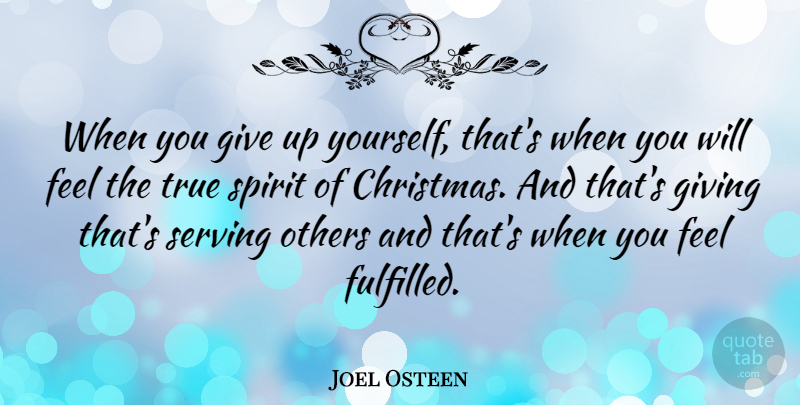
“Here’s to a joyful present and a well-remembered past. Best wishes for Happy Holidays and a magnificent New Year.”
Resources:
Resources and Ideas Fall 2019 Anxiety and Uncertainty (Part One)

What is Anxiety?
Some ideas for Teaching in the classroom:

4-7-8 Breathing
Breathe in through your nose for 4 seconds
Hold your breath for 7 seconds
Exhale through your mouth for 8 seconds.
Repeat as many times as you need
** This technique cause an automatic nervous system shift from a sympathetic state (fight, flight, freeze, flee) to a parasympathetic state.
Grounding with Your Five Senses
What are: Ideas:
5 Things you can see? SUN, picture on the wall, people
4 things you can feel? Wind blowing, feet on the floor
3 things you can hear? Birds chirping, clock
2 things you can smell? Food from lunch,
1 thing you can taste? Toothpaste, breakfast
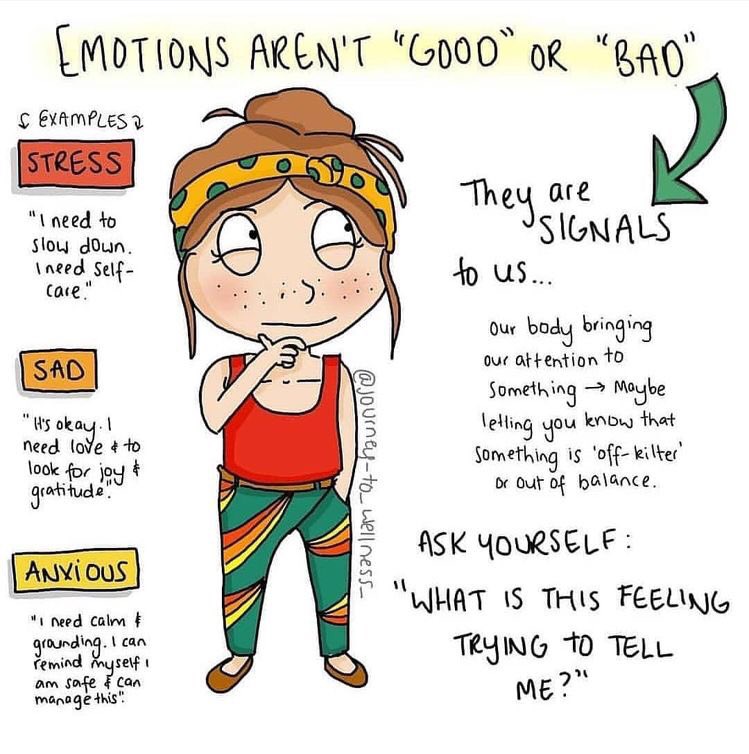
Resources for Teachers:
“In this time of uncertainty it is important to increase your uncertainty tolerance to decrease anxiety.”
Strategies:
When you see them on paper you can face them and analyze how realistic or likely they are.
Reflect on the worst that could happen and the best that could possibly happen. Is either extremely likely? How could you get through even the worst of the scenarios?
Why does not knowing an outcome make you anxious, worried, and stressed?
Practice Acceptance:

Resources:
https://anxietyboss.com/why-do-people-struggle-with-ambiguity-and-why-does-it-cause-anxiety/
Jody Carrington- Kids These Days
Contact SECTA Wellness- amber.fornwald@secpsd.ca

